


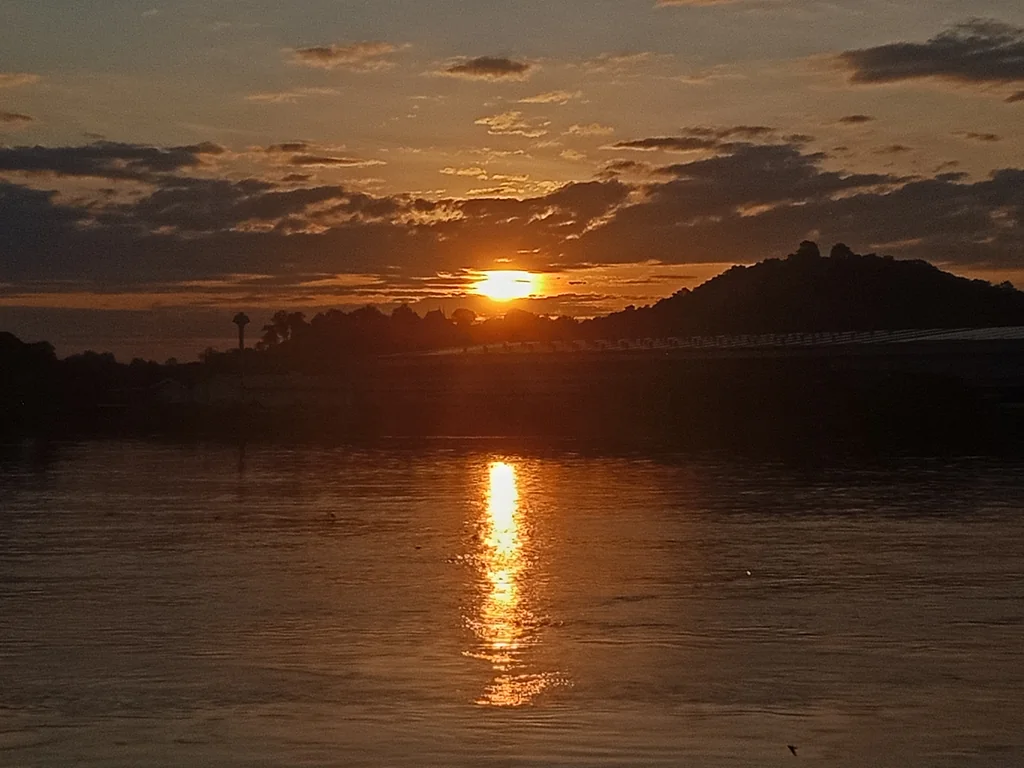
Khao Na Nai Luang Dharma Park pairs mountain scenery with distinctive Buddhist architecture, but a sunrise visit needs more planning than an ordinary temple stop.
The site is in Phanom District, away from Surat Thani city, and its mountain setting is part of the experience. Early light may frame the arches and pagodas beautifully, yet weather, visibility and access are never guaranteed. Treat sunrise as a possibility to prepare for rather than a promise.
What Makes Khao Na Nai Luang Special?
The approach is known for the Buddhawadee Nine-Spired Archway, an ornate gateway that becomes especially striking when the low sun shines through it. Higher on the limestone mountain, white Buddhist structures appear against forested slopes and, on some mornings, drifting mist.
This is an active religious place, not simply a viewpoint. Visitors come for worship and reflection as well as photography. Move quietly, follow posted instructions and avoid blocking stairs or entrances while setting up a photo.
Khao Na Nai Luang also shows a different side of the province from its islands and city centre. For a wider introduction to the mainland, read our Surat Thani city guide.
Check Access Before Planning for Sunrise
The most important step is to verify current access directly before leaving. Tourism articles often feature dawn conditions, but published visitor hours can differ between sources and may change for religious events, maintenance or local management.
Do not assume the gate will be open before sunrise. Ask your accommodation or driver to confirm the latest opening arrangements with the site or a current local source. If pre-dawn access is not available, visit after opening and enjoy the mountain atmosphere in daylight instead.
A confirmed driver is also important. The trip requires an early start from Surat Thani city, and on-demand transport may not be available around the site when you want to return.
A Sensible Early-Morning Plan
Work backwards from the day’s local sunrise time, then add a generous buffer for the road, parking and the uphill walk. Avoid relying on a minute-by-minute schedule. Darkness, rain or an unfamiliar route can slow the journey.
A practical plan looks like this:
- Confirm access and transport on the previous day.
- Check the weather forecast and any local travel alerts.
- Pack water, a light rain layer and a small torch.
- Leave early enough that the driver does not need to rush.
- Walk carefully and pause if the stairs or paths are wet.
- Stay after sunrise to see the architecture in changing light.
If conditions are poor, do not push ahead simply because you woke early. Heavy rain, thunderstorms or slippery steps are good reasons to postpone.
What to Wear and Bring
Choose clothing suitable for both a temple and a climb. Shoulders and knees should be covered, while shoes need enough grip for steep or damp surfaces. A light layer can help before dawn, but expect heat and humidity once the sun is up.
Bring only what you can carry comfortably:
- Drinking water
- A charged phone and portable battery
- A compact torch or headlamp
- Rain protection
- Insect repellent
- A small cloth for mist or rain on camera lenses
- Cash for local expenses or donations
Drones should never be flown without clear, current permission. Tripods and other equipment must not obstruct worshippers or narrow walkways.
Sunrise Photography Without Losing the Experience
The Nine-Spired Archway is a natural focal point, but it is not the only composition. Look for layers of mountain, mist and architecture, and allow the light to change before moving on. A phone can handle the scene well if you tap to expose for the sky and keep the lens clean.
Be honest about conditions. A clear morning may have no mist, while a misty morning may hide the horizon. Neither is a failed visit. The quiet atmosphere and mountain setting can still be memorable without the exact photograph seen in promotional material.
Never step into restricted areas, climb structures or interrupt religious activity for a better angle. Ask before photographing monks or other visitors at close range.
Temple Etiquette
Keep voices low and remove footwear wherever signs or local practice require it. Avoid touching religious objects, sitting with your feet pointed toward Buddha images or posing in ways that trivialise the setting.
Food and drink should stay away from worship areas. Carry your rubbish out, and follow any temporary instructions from monks, staff or community volunteers. If a ceremony is underway, give it space.
Building the Visit into a Surat Thani Trip
Because Khao Na Nai Luang is outside the city, it works best as a dedicated outing rather than something squeezed between fixed transport connections. Keep the rest of the day light, especially if you started before dawn.
After returning, a slow breakfast and rest can be more appealing than another long drive. If you are continuing elsewhere in the province, allow for weather and road delays rather than booking a tight onward connection.
For travellers who prefer to organise the outing from town, Blu Monkey Hub & Hotel Suratthani’s rooms provide a convenient city base. Arrange the vehicle in advance and ask for current local guidance rather than relying on an old social post.
Khao Na Nai Luang rewards preparation and patience. Confirm the practical details, respect the religious setting and let the morning unfold on its own terms.